
5 reasons to get a sewing machine service (before it breaks!) is written by Ros from Rosie Sewing Machines
A sewing machine service is one of those tasks you hear you “should” have done, but perhaps don’t know if it’s worth the hassle. I want to share some real life examples of how getting your machine proactively serviced will not only help protect your machine, but also save you stress, time and money. Money that could be better spent on more beautiful fabric.

First, let’s look at an overview of what is covered in a sewing machine service:
- Removal of machine covers
- Deep cleaning
- Lubrication with oil and grease
- Checks for wear and damage
- Stitch tests
Specifics vary by mechanic/dealership, but the concept is the same. It’s akin to getting a car serviced in order to keep it running longer, and in better condition.
Let’s take a look at some real examples from my workbench.
Why You Should Get A Sewing Machine Service
1. Sewing Machines Need Oil
Most of us have heard that our machines need oil, so what happens if they don’t get enough?
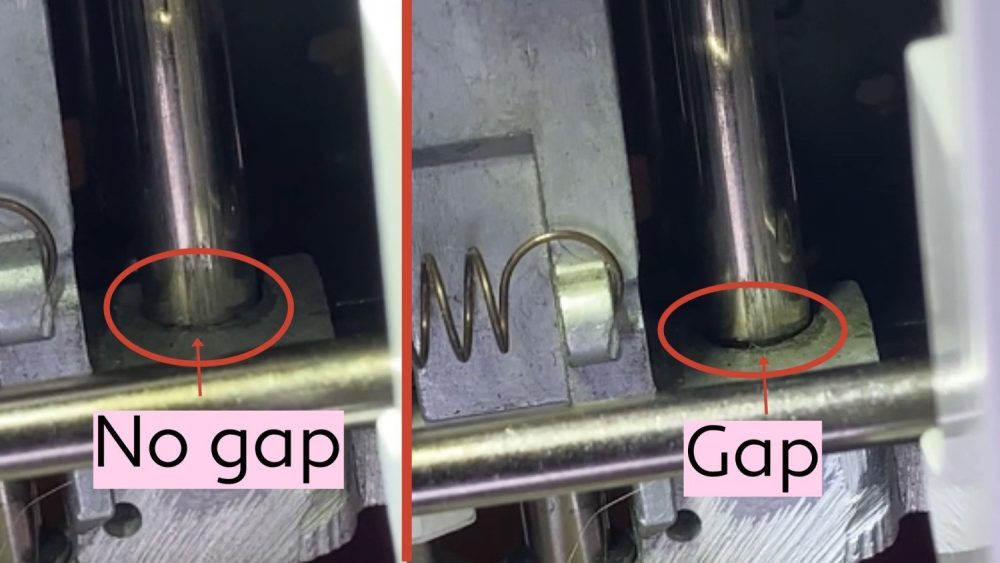
Here is an example.
In this case, without oil to buffer it, the needle bar had been rubbing directly against the metal collar that it sits in. The needle bar eventually widened the collar it sits in; instead of fitting snugly in place, it was swinging loosely. The result: needles smashing against the hook and feed dogs.
This looks like a tiny problem, but actually it was enough to write off this entire machine.
Despite being a very small area of damage, the collar is part of a large metal frame, which would have needed a complete replacement to fix the problem. Having the oil checked during a thorough sewing machine service prevents wear and tear.
2. Sewing Machines Need Grease
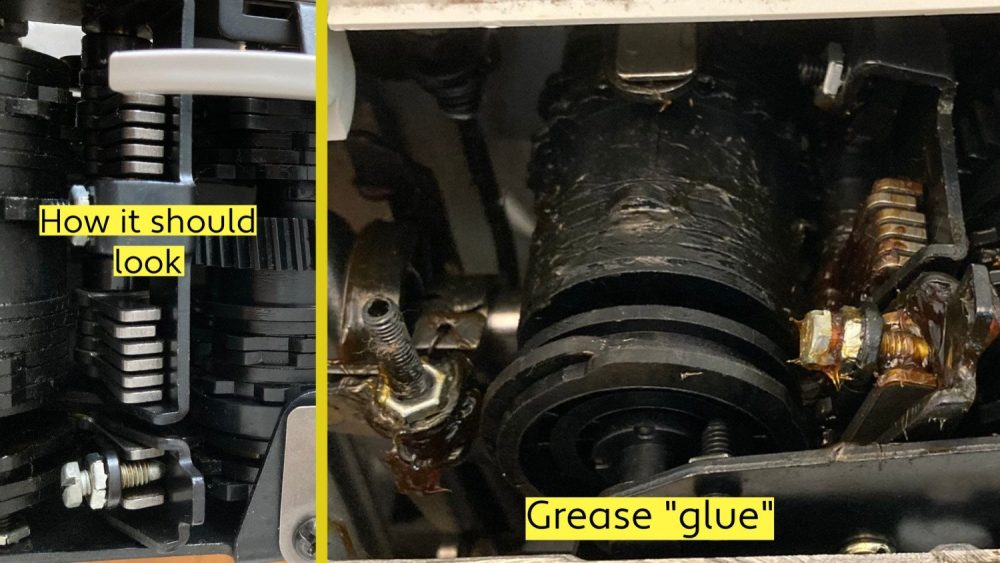
Grease works like oil, but stays in place on parts where oil would simply fly off. It is applied minimally, as its sticky nature is a magnet for debris.
In this example machine, grease had thickened over time into more of a glue-like nature and spread into and onto parts that it should not have. This can restrict the ability of parts to move properly and cause parts to stiffen and seize if left.
Conversely, if left without grease, gears are prone to fail which is a significant repair.
3. Advice and Problem Prevention
Many sewing issues are caused unwittingly by the machine user. There are a few common misunderstandings that I see regularly, and pass on relevant advice to the sewer.
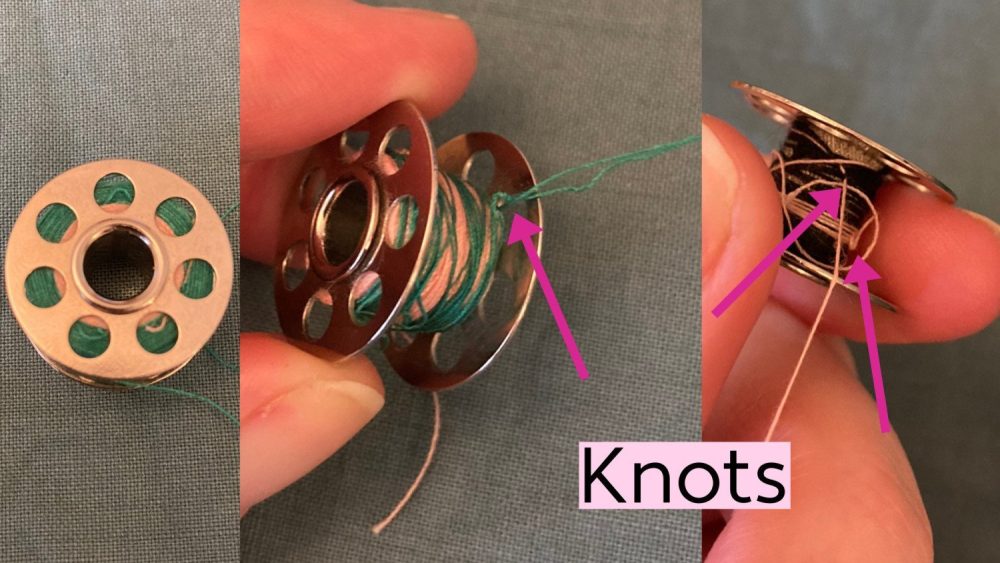
One common issue I see is where the user has wound more than one thread onto the bobbin. This seems like a good idea to save thread, but actually it causes knots to form between the threads. When this reaches your sewing project, you will likely get bird’s nests or other knotty problems. It is better to have several spare bobbins that you can wind a new thread onto when you wish to change colour etc.
Any time I come across this or other simple to fix issues, I explain to the sewing machine user to help them avoid stress when sewing.
4. Advice and Problem Solving
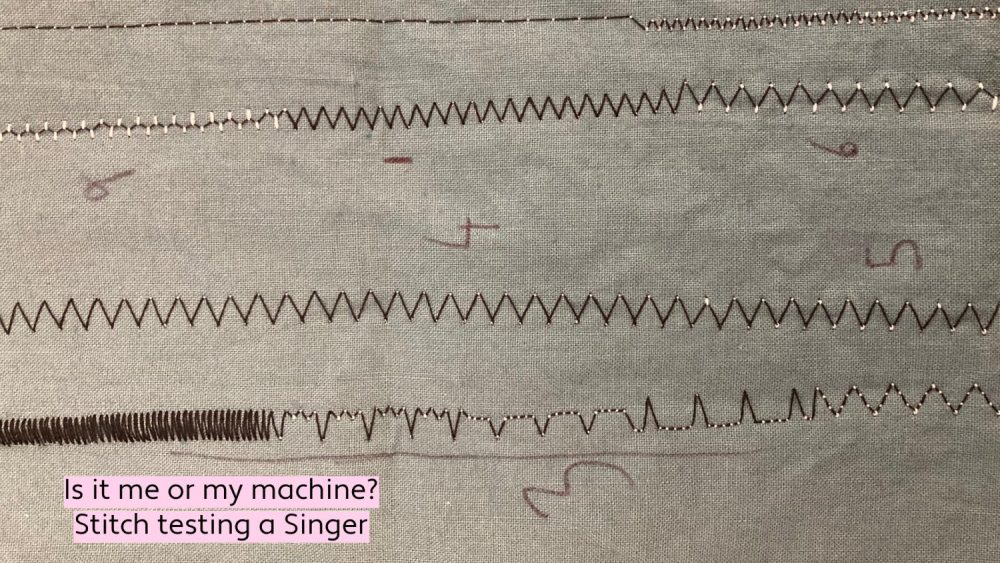
Sometimes sewers don’t realise their machine is not performing the way it should. As many of us sew alone in the comfort of our own homes, we may not realise our stitches don’t look the way they should, or that you shouldn’t need to turn your tension up to 8 to do zig zags. Sometimes it’s simply a tip about how to correct a mistake you may be making, other times it may be an adjustment that the mechanic can do for you.
In addition, simply having a service can resolve sewing problems! It’s amazing the difference a good clean and refresh of lubrication can do to correct many sewing issues. Sewing machines are finely engineered and even small amounts of debris can affect their performance.
5. Better for the Environment (And Your Bank Account)
From the iFixit Manifesto1:
“Making our things last longer is both more efficient and more cost-effective than mining them for more materials.”
From North West Leicestershire recycling page2:
“It can be cheaper and kinder to the environment to repair broken electrical items. A good rule of thumb is to avoid spending more than 50% of the cost of a new product on repairing an old one.”
The longer a machine stays in service, the more value you are getting from its manufactured parts. It will be less likely to need repairs, and when they do come along, they are more likely to be an easy and affordable fix than a catastrophic and costly fail.
Of course, nothing lasts forever; when a machine does come to the end of its lifecycle, the better it has been looked after, the more parts will be able to be salvaged and used in other machines.
When was Your Last Sewing Machine Service?
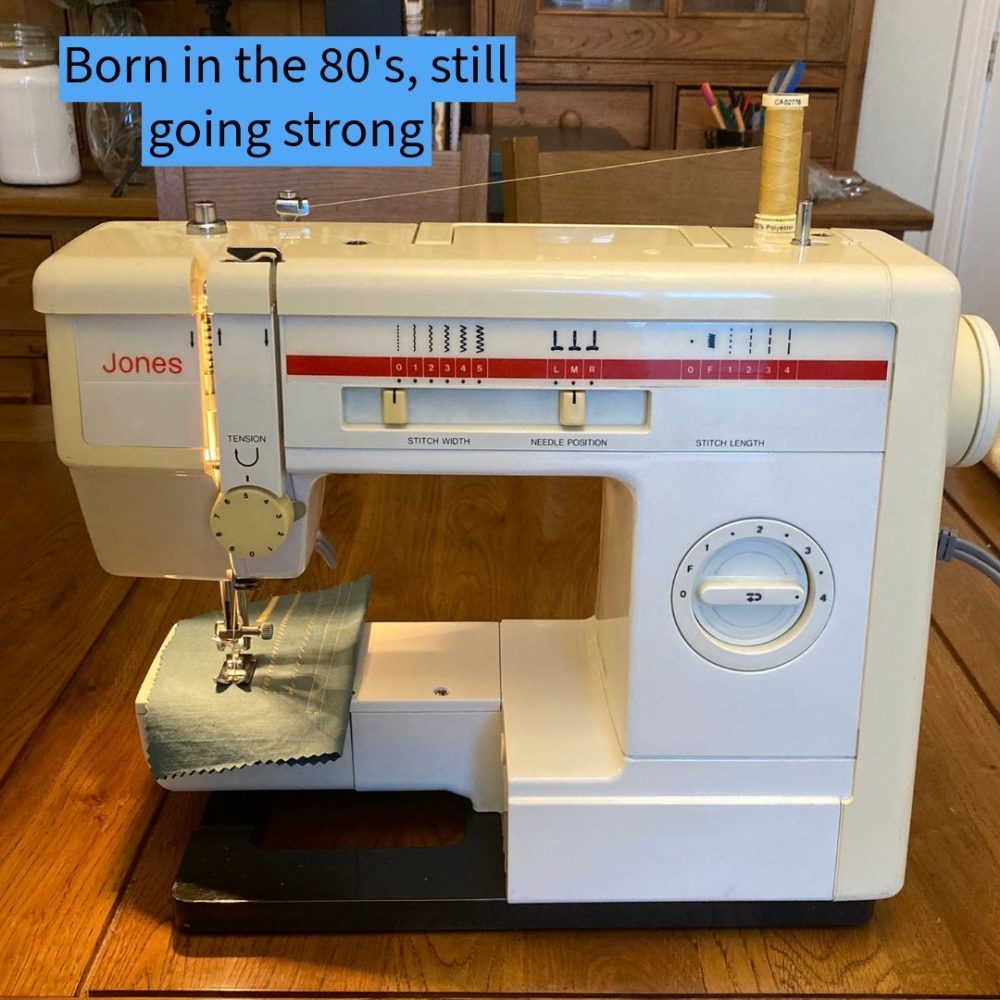
Hopefully those 5 points shed a little light on why a bit of professional TLC for your machine is worth it in the long run. It’s good for your machine, the environment, your pockets and your time. Taking your machine for a service can seem like a hassle in the moment, but it’s less hassle than researching, shopping for, and buying a new machine; then learning to thread it, wind the bobbin, change the pattern selection, adjust the tension etc., etc.
If you’re in Leicestershire and think your machine could do with a freshen up to help it keep sewing for longer, please get in touch with me at Rosie’s Sewing Machine Service and Repair.
Get in touch with Ros through her Facebook page or her website.
Sources:
- https://www.ifixit.com/Manifesto?srsltid=AfmBOoq4G2gT09Lp5NFZTkt1jbNACWvy54RBA7x2P77nfYmEwLZDeaMO
- https://www.nwleics.gov.uk/pages/recycling_a_z_list

